Inside TEOS 3D Manufacturing at Lam Tualatin
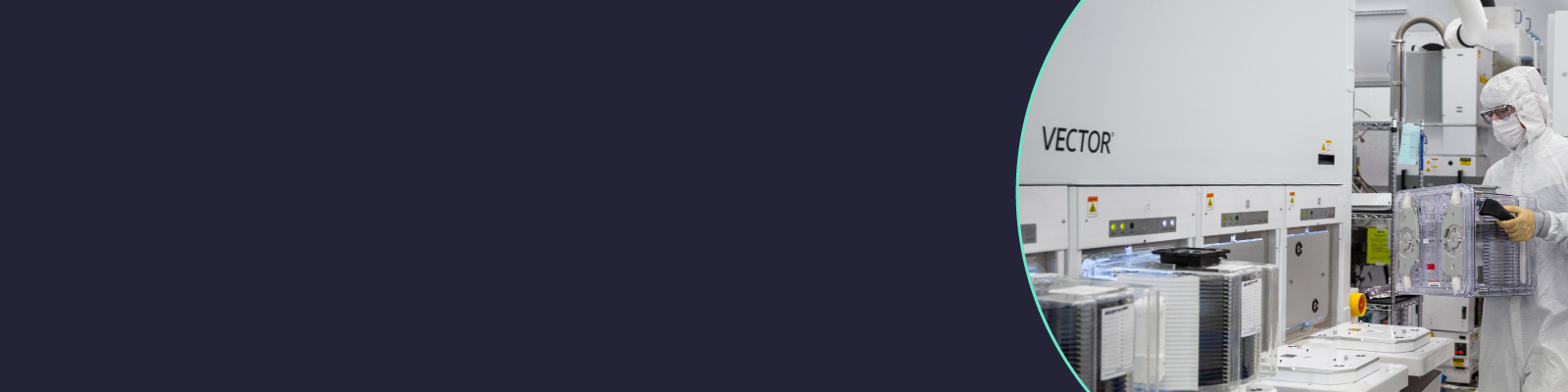
The recently launched VECTOR® TEOS 3D, a new deposition tool designed for advanced packaging, is made at the Lam Tualatin, Oregon, campus.
One of several Lam tools produced in the United States, VECTOR TEOS 3D addresses critical production challenges for 3D chips used in AI, high-performance computing, and gaming. Other U.S.-made tools include Flex®, Kiyo®, and SABRE® 3D.

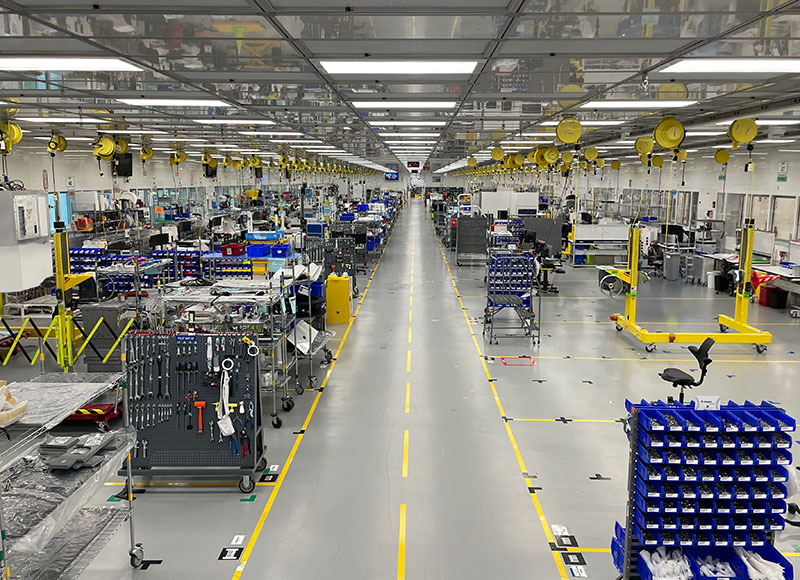
The manufacturing floor where TEOS 3D and other tools are built in Tualatin is anything but an assembly-line process. The Pilot Engineering team works on the left, while the Manufacturing/Assembly team works on the right. Both teams collaborate with ease due to their proximity. Credit: Jerry Davis.
Tualatin manufacturing workers represent a wide variety of experiences, backgrounds, cultures, and nationalities, says senior director of manufacturing Michael Leonard.
Workers (mostly technicians and engineers) typically are hired after graduating from local colleges and universities like Portland Community College, Clackamas Community College, Mount Hood Community College, Oregon State University, Oregon Institute of Technology, and Portland State University.
Many employees learn multidisciplinary skills on the job, enhancing both their adaptability on the factory floor and their potential for career advancement.
As a new product line like TEOS 3D is designed, tested, and built to customer specifications, it passes through two teams who work together at several stages: the Pilot Engineering team and the Manufacturing/Assembly team.
The Pilot Engineering team, led by Mike Longwill, engineering director in Tualatin, performs the process design. This team also designs how the tool is assembled as it flows through the factory.
The Pilot Engineering team includes electrical engineers, mechanical engineers, software engineers, and engineering technicians (prototype assemblers).
“The process allows us to optimize designs with the Product Group [the Lam engineers who design a tool] to prepare it for customers,” Longwill says.
Longwill's team also determines how the tool is tested after it’s assembled to validate the product meets specifications and is ready to function at the customer site.
Having highly skilled technicians and engineers who are agile across different disciplines helps tremendously. “We have people on our teams who are able to do the work well and also have the flexibility to develop new products,” says Jon Brown, senior engineering director of the Tualatin pilot group.
For assembly, the tool goes to the Manufacturing team. But it doesn’t need to travel far. “We work literally across the aisle from the Pilot team in Tualatin,” says Michael Leonard, senior director of manufacturing.
“The goal is to ‘strike plasma’ (power up the tool) to make sure we have a working tool before it goes out to the customers,” Leonard says.
The pilot and manufacturing teams’ physical proximity allows them to work closely together, troubleshooting and collaborating on solutions in real time.
“The Pilot Engineering group comes across the aisle if we have an issue,” Leonard explains. “And we can also get the Product Group to come on the floor to help us out.”
The result is a highly cooperative environment, with an emphasis on continuous improvement, innovation, and workforce development.
The Manufacturing/Assembly workplace is where employees can thrive, with an exceptionally low turnover rate. Manufacturing employees can receive promotion opportunities and career development for higher pay and acquire new and diverse skills that are key to staying agile. For instance, assemblers can train to become test technicians.
Safety is equally central to Lam’s manufacturing culture.
It all makes a difference for workers. “We have a broad cross-discipline team that allows Lam Tualatin to do this kind of advanced manufacturing work safely, day in and day out,“ Jon says.