Lam Research Puts Electric Vehicles in the Fast Lane
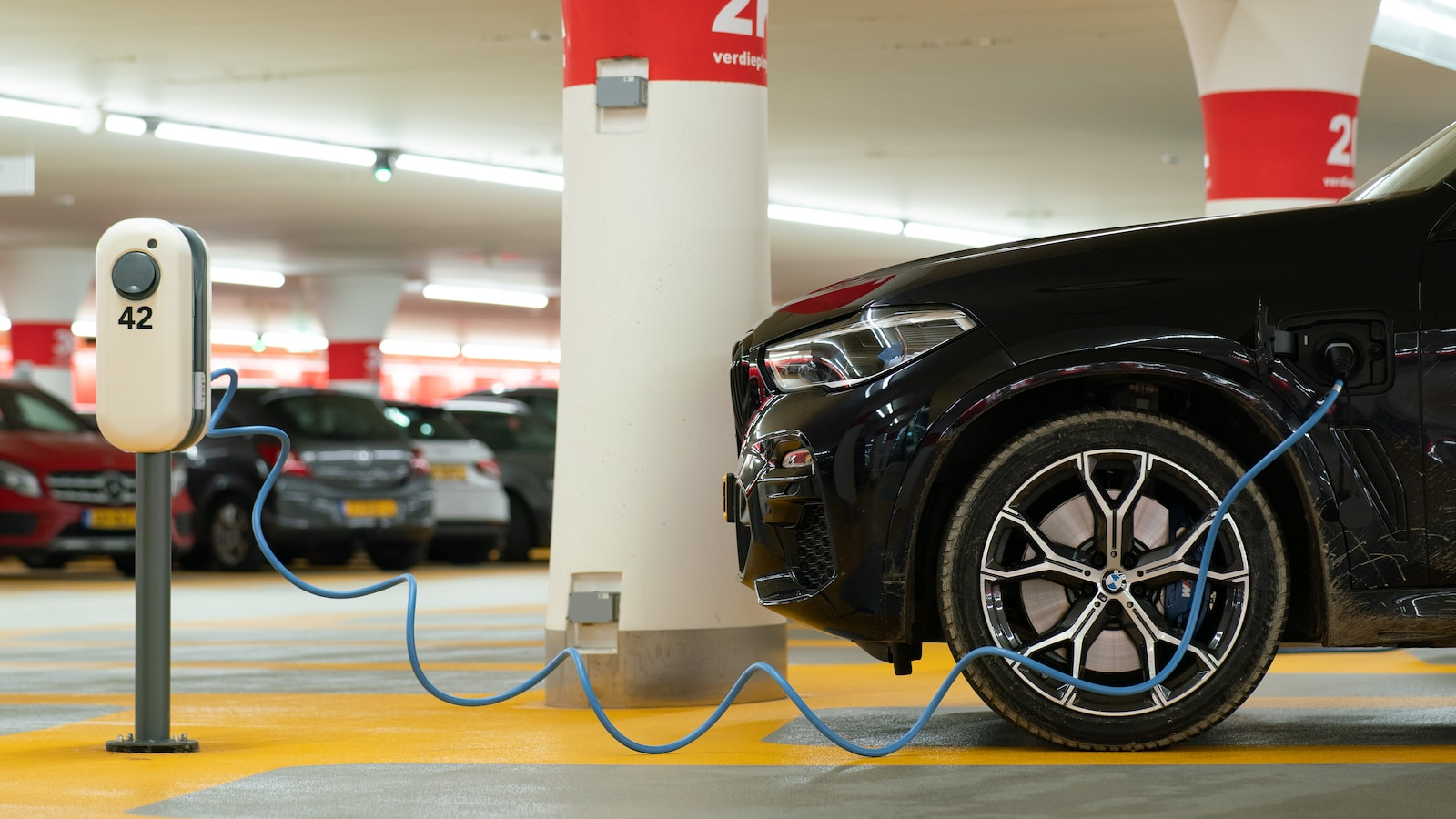

Ever imagine driving a supercomputer around the neighborhood? As the price of electric vehicles (EVs) is reduced and the range at which EV batteries last increases, more and more people are ditching the gas pump for the wall plug.
Why does this matter? When U.S. Commerce Secretary Gina Raimondo advocated for the U.S. CHIPS and Science Act, she described how the typical EV has 2,000 semiconductors. (Even traditional gas-powered vehicles use hundreds of chips.)
“It is striking to realize the amount of semiconductor content in the average car today,” says Chris Carter, group vice president and general manager, Customer Support Business Group (CSBG). “I don't think anyone would have imagined 10 or 15 years ago our cars would have the quantity and diversity of semiconductors present today.”
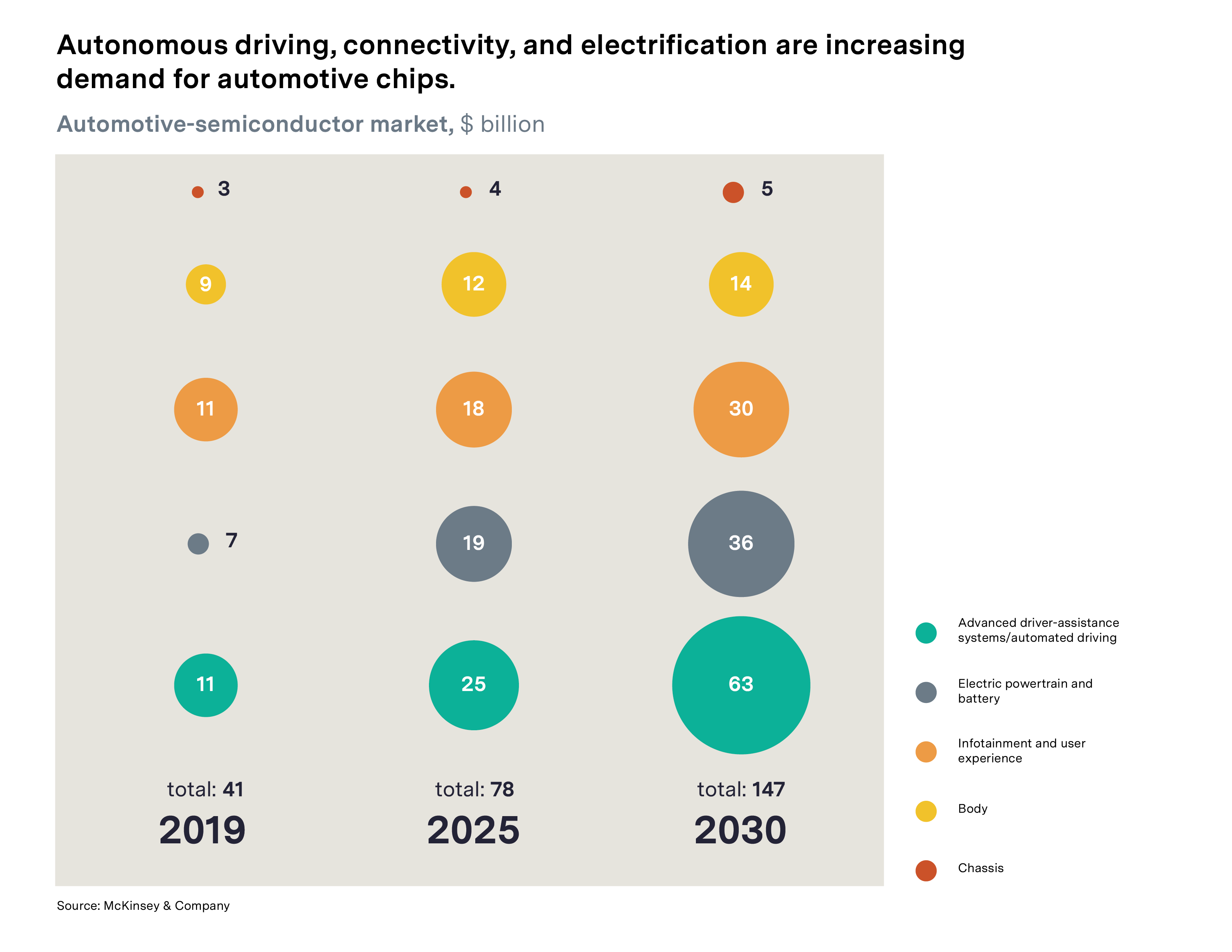
Increased demand for these technological marvels is good news for Lam. As the demand for electric vehicles grows, the need for efficient and reliable semiconductor components grows with it. (To say nothing of the supporting infrastructure, like charging stations.)
According to Reuters' analysis, “The world’s top automakers are planning to spend nearly $1.2 trillion through 2030 to develop and produce millions of electric vehicles, along with the batteries and raw materials to support that production.”
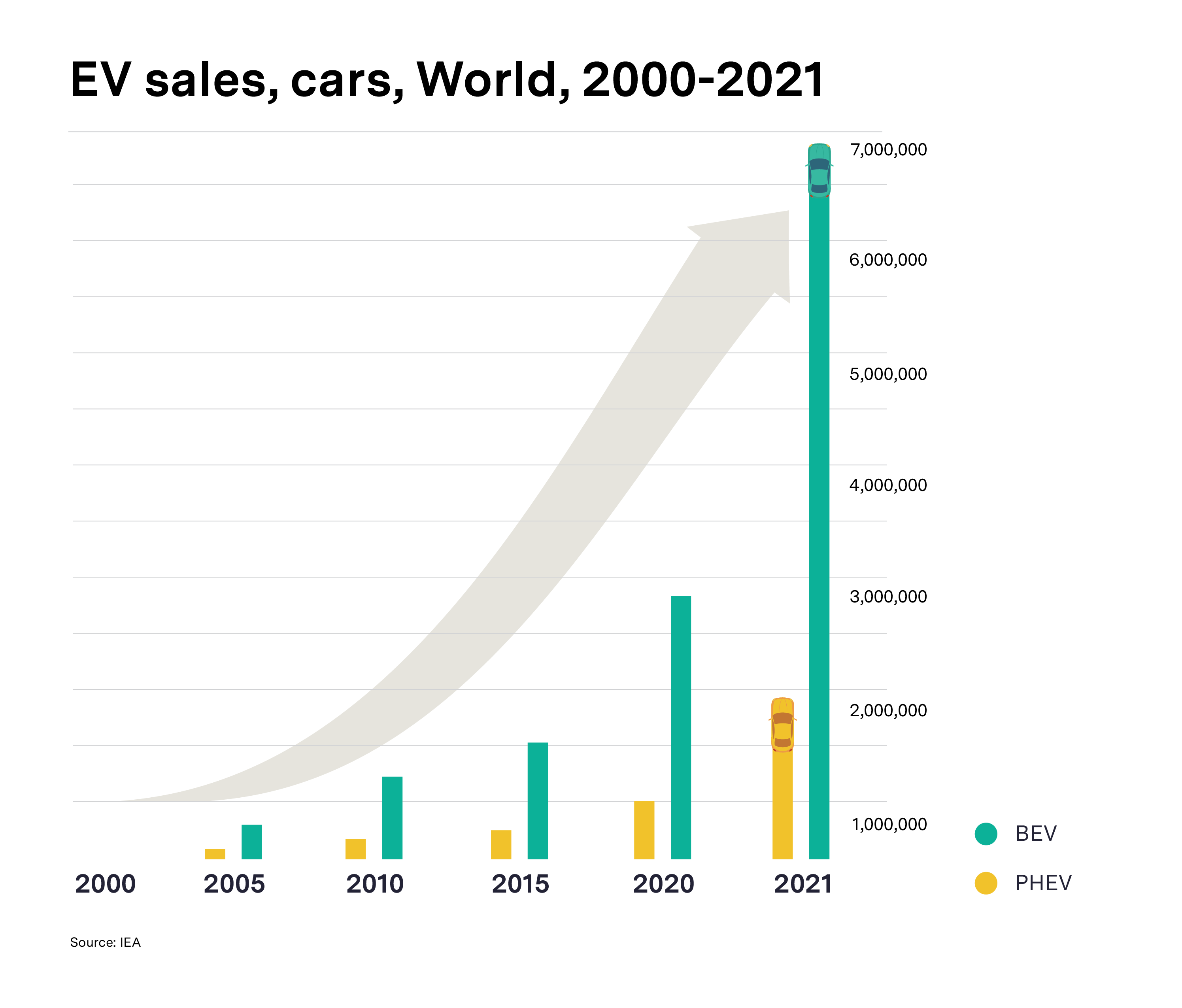
Some of the growth in EV adoption is motivated by the consumer’s desire to have less of an impact on the environment, since EVs are clearly a lower-emissions option than cars with internal combustion engines.
Other consumers are motivated by potential savings to purchase EVs as numerous countries, including the U.S., Japan, China, and in Europe, provide consumer tax credits. Such incentives subsidize buyers to switch over and purchase EVs instead of traditional cars running on gas or diesel.
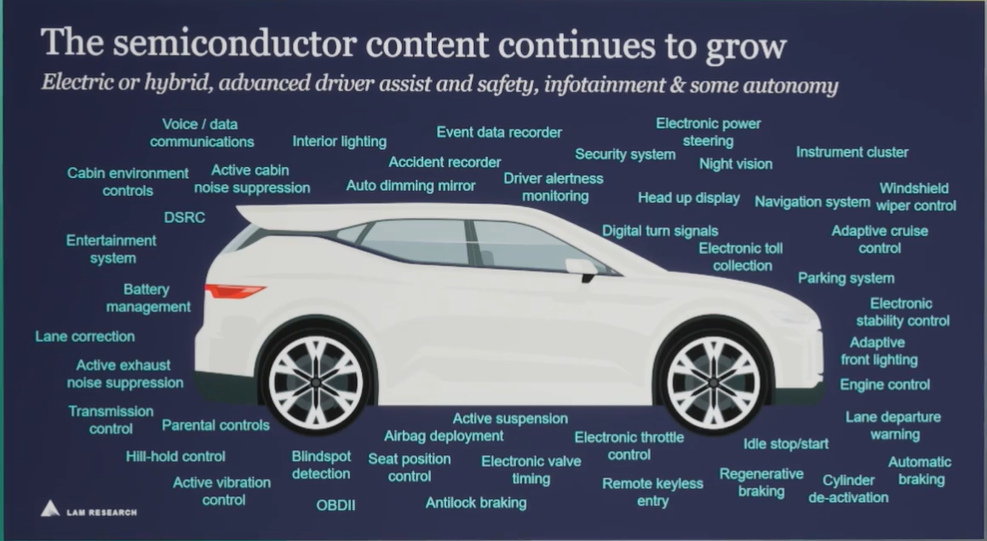
Only a fraction of automotive semiconductors require leading-edge technology. Lam’s Reliant Systems, part of CSBG, is a critical supplier of equipment enabling Specialty Technologies, to semiconductor manufacturers in node sizes greater than 90 nm, which are still very much in demand for the automotive industry. Those chips go into a wide range of automotive components, such as:
“The number of car semiconductors has doubled within the last six years and is expected to grow by at least another 40% in the coming six years,” says Chris Carter.
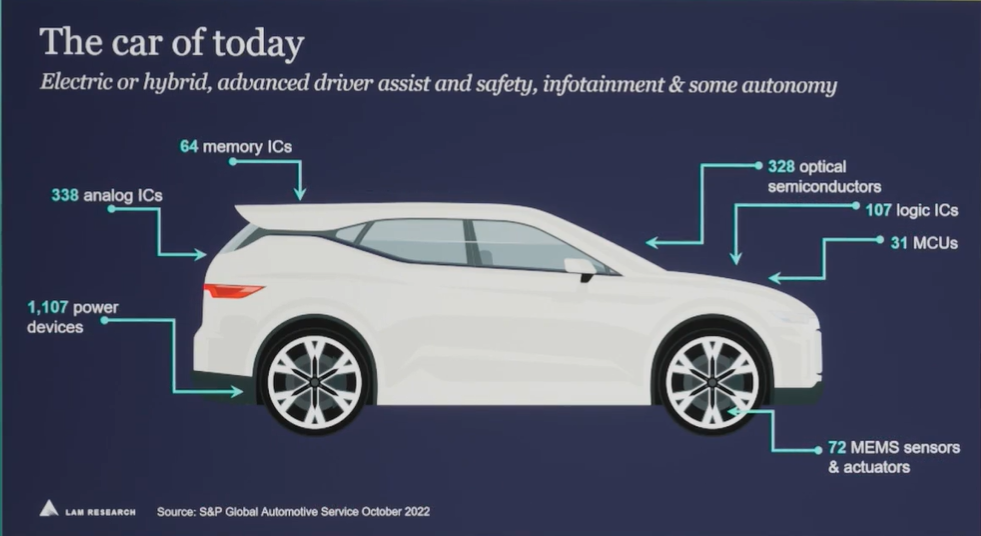
Lam plays a significant role in bringing those technologies to market. In 2021, for example, Lam unveiled the Syndion GP®, a tool that provides deep silicon etch capabilities to chipmakers building next-gen power devices and power management integrated circuits used in the automotive industry, among others.
Lam’s Alliance® tools, of which there are thousands in the field today, continue to support automobile chipmakers in the 200mm space and provide ongoing revenue for our Reliant business with maintenance and upgrades.
“Just 20 years ago, cars typically had antilock brakes and airbags,” Chris says. “But today, cars at every price point contain numerous safety, technology, comfort, and convenience features that are enabled by specialty devices.”
While still a small percentage of total automobile sales, EV growth is clearly in the fast lane. Bloomberg reports that at least two-thirds of global car sales will be electric by 2040. And Lam will be there too, helping drive EV growth.
Top image credit: Michael Fousert (Unsplash)
This article contains forward-looking statements within the meaning of the Private Securities Litigation Reform Act of 1995. Forward-looking statements include any statements that are not statements of historical fact, including statements regarding Lam’s role in supplying semiconductor manufacturers for electric vehicles, expectations for demand for electric vehicles and semiconductors, and trends driving demand. Forward-looking statements are subject to risks and uncertainties that could cause actual results to differ materially from the expectations expressed, including the risks and uncertainties described in our filings with the U.S. Securities and Exchange Commission, including specifically the Risk Factors described in our annual report on Form 10-K and quarterly reports on Form 10-Q. You should not place undue reliance on forward-looking statements. We undertake no obligation to update any forward-looking statements.