Everything You Need to Know About Akara®
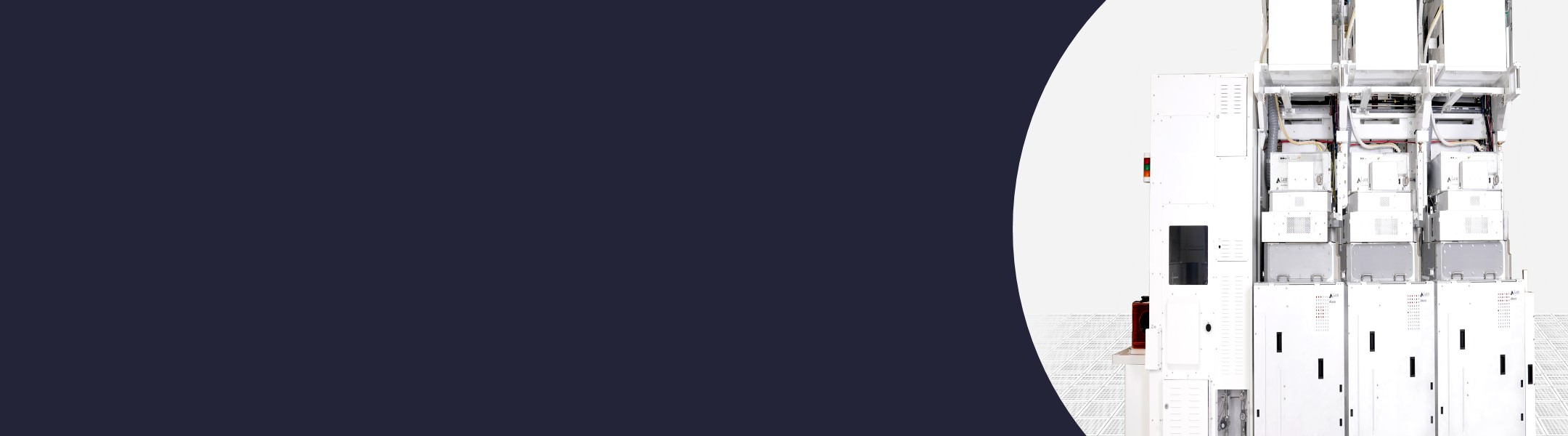
Akara is the industry’s most advanced conductor etch technology to date
Imagine trying to sew an intricate lace pattern onto fabric with a needle so fine, it’s nearly invisible. The thread is as delicate as a single strand of hair, and each stitch must be perfectly placed. This precision is necessary not only to create the lace design but to ensure its structural integrity. One misplaced stitch could distort the entire pattern, rendering the final piece unusable.
This is the challenge of conductor etch for semiconductors, where angstrom-level precision is not just an art—it's a necessity.
New logic and memory device architectures, such as gate-all-around (GAA) transistors, require exacting capabilities that exceed that of traditional plasma etch technologies. Creating such device architectures requires challenging critical etch steps and precise EUV lithography patterning.
Lam’s latest etch tool, Akara®, is a significant achievement for the future of semiconductors by enabling chipmakers to overcome the industry's most difficult scaling challenges. These include challenges in creating GAA transistors and 6F2 DRAM and 3D NAND devices. In addition, Akara is extendible for 4F2 DRAM, complementary field effect transistors, and 3D DRAM.
Akara is the industry’s most advanced conductor etch technology to date, built on Lam’s two decades of market leadership in conductor etch and featuring unique plasma control capabilities.
“Akara is a generational leap forward in conductor etch capabilities for shaping small, complex structures for the 3D era of chips,” says Sesha Varadarajan, senior vice president of the Global Products Group at Lam Research.
Akara is built on the legacy and success of the Kiyo® conductor etch tool and features a suite of proprietary solutions that can deliver atomic-scale features:
Watch this video for a closer look at Akara’s capabilities:
Barrett Finch is managing director of Product Marketing at Lam Research.
Caution Regarding Forward-Looking Statements
Statements made in this article that are not of historical fact are forward-looking statements and are subject to the safe harbor provisions of the Private Securities Litigation Reform Act of 1995. Such forward-looking statements relate to but are not limited to: market and industry trends; the future growth of the semiconductor industry and our ability to capitalize on such growth; the potential future benefits of, opportunities arising from, and applications to the semiconductor industry resulting from our products and technologies; and our continued ability to produce and apply products and technologies resulting in benefits to our customers, suppliers, and the semiconductor industry. Some factors that may affect these forward-looking statements include: trade regulations, export controls, trade disputes, and other geopolitical tensions may inhibit our ability to sell our products; business, political and/or regulatory conditions in the consumer electronics industry, the semiconductor industry and the overall economy may deteriorate or change; the actions of our customers and competitors may be inconsistent with our expectations; supply chain cost increases and other inflationary pressures have impacted and may continue to impact our profitability; supply chain disruptions or manufacturing capacity constraints may limit our ability to manufacture and sell our products; and natural and human-caused disasters, disease outbreaks, war, terrorism, political or governmental unrest or instability, or other events beyond our control may impact our operations in affected areas; as well as the other risks and uncertainties that are described in the documents filed or furnished by us with the Securities and Exchange Commission, including specifically the Risk Factors described in our annual report on Form 10-K for the fiscal year ended June 30, 2024 and our quarterly report on Form 10-Q for the quarter ended December 29, 2024. These uncertainties and changes could materially affect the forward-looking statements and cause actual results to vary from expectations in a material way. The Company undertakes no obligation to update the information or statements made in this article.